Audition Logs vs. Automated Trackers

Tracking your auditions is essential for understanding your career progress and improving your strategy. There are two main methods: manual audition logs and automated trackers. Each has its pros and cons, depending on your workload, budget, and goals.
- Manual Audition Logs: Use notebooks or spreadsheets to record audition details like project name, role, date, and outcome. It's free and customizable, but time-consuming and prone to errors.
- Automated Trackers: Digital tools sync with casting platforms (e.g., Actors Access) to log data automatically. They save time, provide analytics, and streamline tracking but usually require a subscription (e.g., $8/month for CastmeNow).
Key Takeaway:
Manual logs are great for beginners or those with fewer auditions. Automated trackers work best for actors managing high volumes, offering insights like booking ratios and casting trends. A hybrid approach - manual notes for personal details plus automated tracking for analytics - can balance efficiency and control.
Quick Comparison:
| Feature | Manual Logs | Automated Trackers |
|---|---|---|
| Cost | Free | $3–$8/month |
| Time Investment | High | Low |
| Analytics | Limited | Detailed |
| Ease of Use | Simple | Requires setup |
| Data Accuracy | Prone to errors | Consistent |
Choose what fits your needs, but consistency in tracking is the real key to success.

Manual Audition Logs vs Automated Trackers Comparison Chart
You DON'T Log Your Auditions? Here's what you're missing!
How Audition Logs Work
Before diving into automated solutions, it’s important to understand how manual methods function and what they offer.
Common Formats and Data Fields
Actors often rely on tools like paper notebooks, spreadsheets (think Excel or Google Sheets), or digital templates to track their auditions. Notebooks are simple and portable, making it easy to jot down notes on the spot. Spreadsheets, on the other hand, provide more structure, allowing you to sort and filter data as needed. Digital templates combine these benefits, offering pre-built fields to keep everything neatly organized in one place.
A well-maintained audition log typically includes details like the date and time (e.g., 09/10/2025, 11:30 AM), project title, casting director, platform (e.g., Actors Access), role type, location (city, state, or "self-tape"), audition format (in-person, virtual, or self-tape), outcome (submitted, callback, booked), pay rate (e.g., $500/day or SAG-AFTRA scale), and personal notes. Personal notes might include feedback, room details, or material prepared. For example, Up-To-Date Actor suggests tracking "who was in the room", the feedback you received, and what material you used to help refine your approach for callbacks. These formats provide a solid foundation for understanding the advantages and shortcomings of manual tracking.
Benefits of Manual Logs
Manual logs give you full control, allowing you to customize fields for specific needs like wardrobe details, coaching notes, or personal goals. They’re also incredibly accessible - anyone with a pen and paper can start logging without worrying about technical know-how. Plus, they’re budget-friendly, often costing nothing. Another perk? They make it easy to track repeat interactions with casting directors, helping you build stronger professional relationships.
That said, manual logs come with their own set of downsides.
Limitations of Manual Logs
The biggest issue with manual tracking is the time commitment. Logging every detail by hand can take time away from acting and honing your craft. Inconsistencies are another common problem - missing entries can make it tough to spot patterns, like which types of roles you’re more likely to book. If you’re juggling multiple casting platforms, consolidating all that data into a single, clear picture can be a headache. This often leads to fragmented records, leaving you without the insights you need to improve your strategy. These challenges underscore the value of a more streamlined approach, paving the way for automated tools in the next section.
How Automated Trackers Work
Automated trackers simplify the process of managing audition data by syncing directly with your casting accounts. Instead of manually inputting every detail, these tools connect with platforms like Casting Networks and Actors Access, creating a centralized system that updates automatically as you submit for new roles. This constant syncing not only saves time but also sets the stage for advanced features that can significantly streamline your workflow.
Key Features of Automated Trackers
These trackers are built to make an actor's life easier. For starters, they automatically log every submission the moment it happens, eliminating the need for tedious spreadsheet updates. With all your data stored in one place, you can access it from any device, and many tools even offer handy email reminders for important deadlines like self-tapes or callbacks.
Another standout feature is the analytics dashboard. These dashboards don't just track your performance - they help you uncover patterns that can sharpen your audition strategy. For instance, you can see metrics like your booking rate, average pay per role, or which casting directors are most likely to call you back. Take CastmeNow’s tracker as an example: it might reveal that you book twice as often for short-form roles, helping you fine-tune your focus. The platform even uses AI to analyze your headshots and reels, showing which ones lead to more bookings and giving you actionable advice to improve your marketing materials.
Benefits of Automation
The biggest perk of automation? Time savings. Instead of spending hours updating spreadsheets, you can shift your focus to what matters most - whether that’s rehearsing, networking, or simply taking a breather. With every submission automatically logged, you also gain access to a treasure trove of data that can highlight long-term trends in your career.
Real-time analytics give you the power to make smarter decisions faster. Forget manually crunching numbers to figure out your callback ratios or trying to remember which casting offices have booked you in the past. A centralized dashboard gives you a clear, instant snapshot of your performance across multiple platforms. For example, CastmeNow users have reported submitting for 100+ roles weekly and seeing a tenfold increase in auditions. These kinds of efficiency boosts can be game-changing, though it’s important to weigh the potential downsides.
Drawbacks of Automated Trackers
Of course, automation isn’t without its challenges. One key consideration is cost. While traditional manual logs are free, most automated trackers operate on a subscription model. For instance, CastmeNow’s Unlimited plan, which offers comprehensive tracking and insights, costs $8 per month. For actors on a tight budget - especially those just starting out - this recurring fee can feel like a stretch.
Another issue is reliance on technology. If the system goes down or you lose internet access, automated logging could stop, leaving gaps in your records. This makes having a backup method essential. Privacy is another concern, as these tools require access to your casting accounts. While reputable platforms prioritize security, it’s worth understanding what data is shared and how it’s safeguarded. These challenges highlight the importance of balancing automation with a reliable backup plan to ensure your career data remains secure and uninterrupted.
Audition Logs vs. Automated Trackers
Choosing between manual audition logs and automated trackers boils down to your audition workload, budget, and how much time you're willing to spend on admin tasks instead of perfecting your craft.
Comparison Table
| Criteria | Manual Audition Logs | Automated Trackers |
|---|---|---|
| Setup Effort | Minimal (just a spreadsheet or notebook) | Moderate (link casting profiles and set preferences) |
| Time Required | High (manual entry for every audition) | Low (auto-sync and one-click updates) |
| Data Accuracy | Varies (human error is possible) | Consistent (directly imported from platforms) |
| Analytics Depth | Limited (manual calculations needed) | Comprehensive (booking rates, pay trends, and more) |
| Multi-Platform Support | None (requires manual consolidation) | Extensive (integrates data from multiple platforms) |
| Cost in USD | Free (pen, paper, or free tools) | Subscription-based (starting at $8/month) |
| Accessibility | High (basic tools available to all) | High (web and mobile app access) |
| Learning Curve | Easy (basic data entry) | Easy (user-friendly interfaces) |
| Data Security | Depends on your storage method | Managed by the platform |
When to Use Each Method
The choice between these two systems depends on your personal circumstances and how much value you place on convenience and analytics.
Manual logs are a no-cost, straightforward option for actors with a smaller number of auditions. A simple spreadsheet or notebook works perfectly if you prefer analog methods or want to keep your data entirely in your hands without involving third-party tools.
Automated trackers, on the other hand, are a lifesaver for those managing a high volume of auditions. If you're submitting for multiple roles weekly through platforms like Actors Access or Casting Networks, manual tracking can quickly become a time sink. Automated systems streamline this process, pulling data directly from casting platforms and offering dashboards that provide insights into your performance. As noted by Jen Waldman Studio, reviewing and adjusting your strategy regularly is crucial for an audition log to be effective. Automated systems make this process seamless with built-in analytics. For example, CastmeNow's Unlimited plan, priced at $8 per month, not only tracks unlimited auditions but also highlights trends like the types of roles you book most often - saving you from tedious manual calculations.
Ultimately, the best choice depends on how many auditions you handle and whether you value simplicity or advanced tools in managing your career.
Choosing the Right Tracking Method
Factors to Consider
The volume of auditions you handle is a key factor when deciding on a tracking method. If you’re submitting for just a few roles each month, a simple spreadsheet might do the job. But if you’re juggling 10 or more roles weekly, manual entry can quickly become a time sink. Consider your workload, budget, and comfort with technology. If you value analytics, automated tools can deliver instant insights - like which casting directors are calling you back or your booking rates by role type. On the other hand, manual logs require more effort to analyze trends.
Ultimately, the right method depends on your career stage and specific needs.
3 Tracking Models
Log-only workflows are perfect for beginners or actors with fewer than five auditions per month. This involves recording key details - like the date, project name, casting director, role, and outcome - in a notebook or a Google Sheet. It’s simple and free, but identifying patterns requires a lot of manual effort.
Hybrid models are ideal for actors managing between 5 and 20 auditions weekly. With this setup, you can use an automated tracker to pull data from casting platforms such as Actors Access or Casting Networks while keeping a manual log for personal notes and feedback. It offers a balance between efficiency and the ability to track nuanced details that help you refine your approach.
Automation-first workflows cater to professionals handling over 20 roles weekly across multiple platforms. These systems handle everything from submissions to tracking and provide valuable analytics - like median pay rates or which headshots are performing best. This approach not only saves hours of work each week but also delivers strategic insights that would be tough to generate manually.
No matter the model, incorporating automation can make tracking more efficient, as platforms like CastmeNow demonstrate.
How CastmeNow Helps
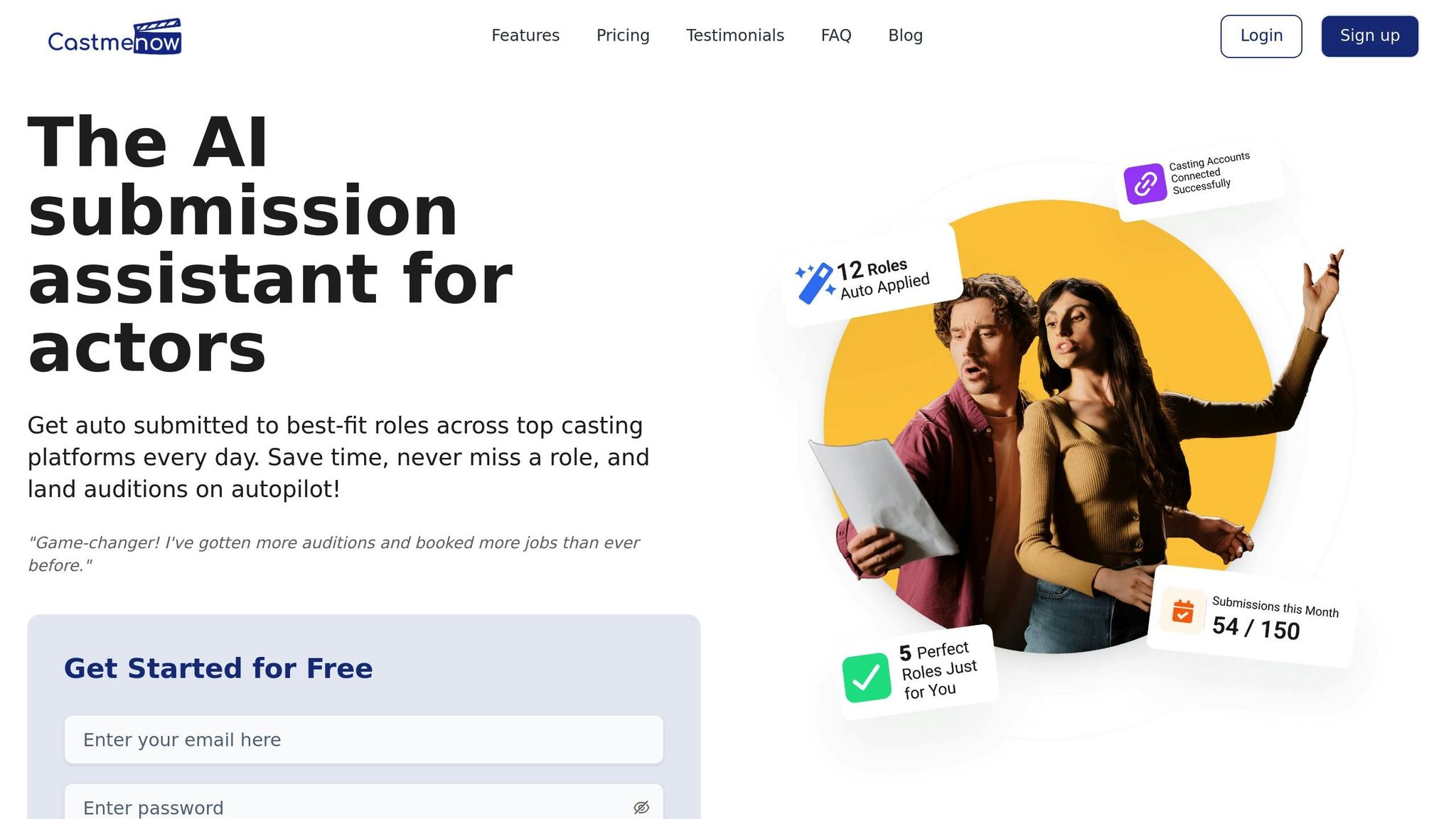
CastmeNow adapts to any of these tracking models, depending on where you are in your career. If you’re just starting to explore automation, the Basic plan costs $3 per month and can automatically apply to up to 10 roles daily. This allows you to continue maintaining a personal log for deeper insights. For actors managing a higher volume, the Unlimited plan at $8 per month supports unlimited daily submissions and includes over 25 analytics tools. These tools track everything from total auditions to success rates by role type and even identify your top casting directors.
The platform also integrates seamlessly with your casting profiles, automatically importing auditions and eliminating the need for manual entry. Its AI learns from your booking patterns, offering suggestions like expanding your reel to match the roles you book most often. And with a free 30-day trial (no credit card required), you can see how much time automation could save you before committing to a subscription. By simplifying both the submission and tracking process, CastmeNow allows you to focus more on your craft while keeping a clear view of your career progress.
Conclusion
When it comes to tracking auditions, your choice largely hinges on your career stage, the number of auditions you handle, and your personal goals. Manual logs are simple, free, and give you full control, making them a great option if you're just starting out or managing a smaller workload. On the other hand, automated trackers, though subscription-based, save time and provide insights that would require significant effort to gather on your own. Many actors find that combining both approaches works best.
A hybrid system - using automation for submissions and data tracking while leaving space for personal notes - can strike the perfect balance. Research even shows that tracking your progress can increase success rates by 42%.
A good tracking system should help you make clear, actionable decisions: Which casting directors are calling you back most often? Are you booking more roles in specific categories? Is it time to update your headshots or expand your reel? Whether you're using a notebook, a spreadsheet, or a platform like CastmeNow, the key is that your system helps you answer these questions without adding unnecessary stress.
The goal is to collect data that leads to real decisions. As highlighted earlier, the right system can fine-tune your audition strategies. Jen Waldman Studio puts it best: actors should "collect the data that will be meaningful to you". Whether you lean toward manual methods, automation, or a mix of both, consistency is what truly matters. Choose a system you'll stick with, schedule regular reviews, and let the insights guide your next moves.
FAQs
What are the benefits of combining traditional audition logs with automated tracking tools?
Using a hybrid method for audition tracking allows you to blend the personal touch of traditional logs with the convenience of automated tools like CastmeNow. By manually jotting down important audition details, you stay in control and gain a clearer picture of your progress. Meanwhile, automation takes care of repetitive tasks like searching for roles and submitting applications, so you never miss a chance.
This combination helps you save time, stay organized, and dedicate more energy to what truly matters - your craft. It’s a practical way to stay ahead in the fast-moving world of entertainment.
What advantages do automated audition trackers have over traditional logs?
Automated audition trackers come with some clear perks over old-school manual logs. For starters, they save you a ton of time by simplifying the application process, giving actors back precious hours every week. Plus, they help maximize audition opportunities by ensuring you never overlook a role that fits your profile.
With handy features like AI-powered role matching and round-the-clock application options, these tools give you a better shot at landing auditions. And because they handle the tedious stuff, you can spend more time focusing on what really matters - perfecting your craft. This streamlined approach keeps you organized and ready to tackle your acting goals head-on.
How can tracking auditions help advance my acting career?
Tracking auditions efficiently can make a big difference in moving your acting career forward. Tools like CastmeNow simplify this process by linking directly to your casting profiles, finding roles that match your preferences, and even applying for you around the clock. This way, you won’t miss out on opportunities and can reclaim precious time.
By letting automation handle these repetitive tasks, you can dedicate more energy to improving your skills and preparing for auditions. Keeping a detailed and organized record of your auditions also helps you monitor your progress, spot patterns, and fine-tune your strategy, which can lead to more bookings and steady career growth.