Actor Headshot Wardrobe: Matching Looks to Role Types
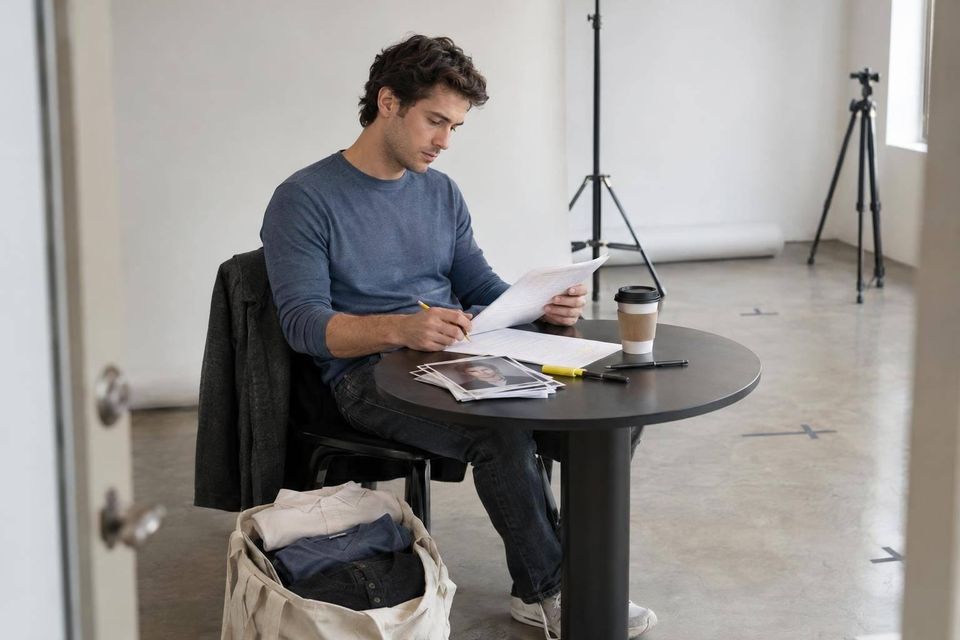
I’d start with 2–3 target role types, 2–3 tops, and 1 layer - not a costume. My goal is to suggest the part while keeping your face the focus.
Here’s how I’d match clothing to the six role types:
- Professional and executive: A blazer, collared shirt, or polished blouse.
- Serious and authority: Dark solids and a structured layer.
- Student and early-career: Simple tees, casual shirts, or clean denim.
- Parent, caregiver, and neighbor: Soft sweaters, henleys, or relaxed cardigans.
- Artistic and alternative: One restrained color or texture.
- Hands-on and practical: A clean overshirt, plain tee, or workwear-inspired jacket.
For every look, I’d check fit, choose colors that suit your face, and skip distracting logos, patterns, and props. Then I’d test the outfit on camera, check the thumbnail crop, and keep profile photos and submission details current. <u>The clothes suggest the role; your expression does the rest.</u>
Choosing an Actor "Type" & Prepping Headshot Outfits
sbb-itb-daa9c42
Headshot Clothing: Fit, Color, and Layers
Check the fit where the camera sees it: shoulder seams should sit at the natural edge, collars should lie flat, and fabric shouldn’t pull across your chest or arms. Lift both arms to check for collar tug or jacket ride-up. A removable layer can add structure, but bulky lapels or oversized shoulders can overwhelm a tight crop.
Choose Colors and Necklines That Frame Your Face
Stick with solid, mid-tone colors such as muted blue, charcoal, burgundy, forest green, or warm earth tones. Restrained jewel tones and subtle textures can also work without drawing attention away from your face. Test each color against your skin, hair, eyes, background, and lighting. White can blow out highlights, while black can lose texture.
Open collars, modest V-necks, and simple crew necks help keep the neckline clean and your face the focus. Leave your neck visible without drawing the eye downward. Skip deep V-necks, off-the-shoulder styles, strapless tops, and thin straps; they can crop awkwardly and pull attention below your face. Check the final crop, not just the mirror.
Avoid Patterns, Logos, and Costume Pieces That Distract
Fine patterns can create moiré in digital photos. Other details may catch light or tie the image to a particular outfit or trend. The result depends on lighting, camera distance, framing, and image compression, so test any questionable pieces before deciding.
Use this guide to keep clothing secondary to your face.
| Garment or styling choice | Likely visual effect | Recommended use | Reason to avoid |
|---|---|---|---|
| Pinstripes, tight checks, busy prints | Visual movement; possible moiré | Use only after a clean camera test | Can compete with the eyes. |
| Logos, text, large graphics | Draws attention to a message | Generally omit | Makes the garment a focal point. |
| Shiny fabric or oversized jewelry | Bright reflections near the face | Limit; test under session lighting | Highlights can distract from expression. |
| Props, uniforms, period or costume-like pieces | Suggests a literal character or era | Use only when the image should signal a specific role type | Can turn a suggested casting lane into a costume. |
Outfit Plans for 6 Role Types
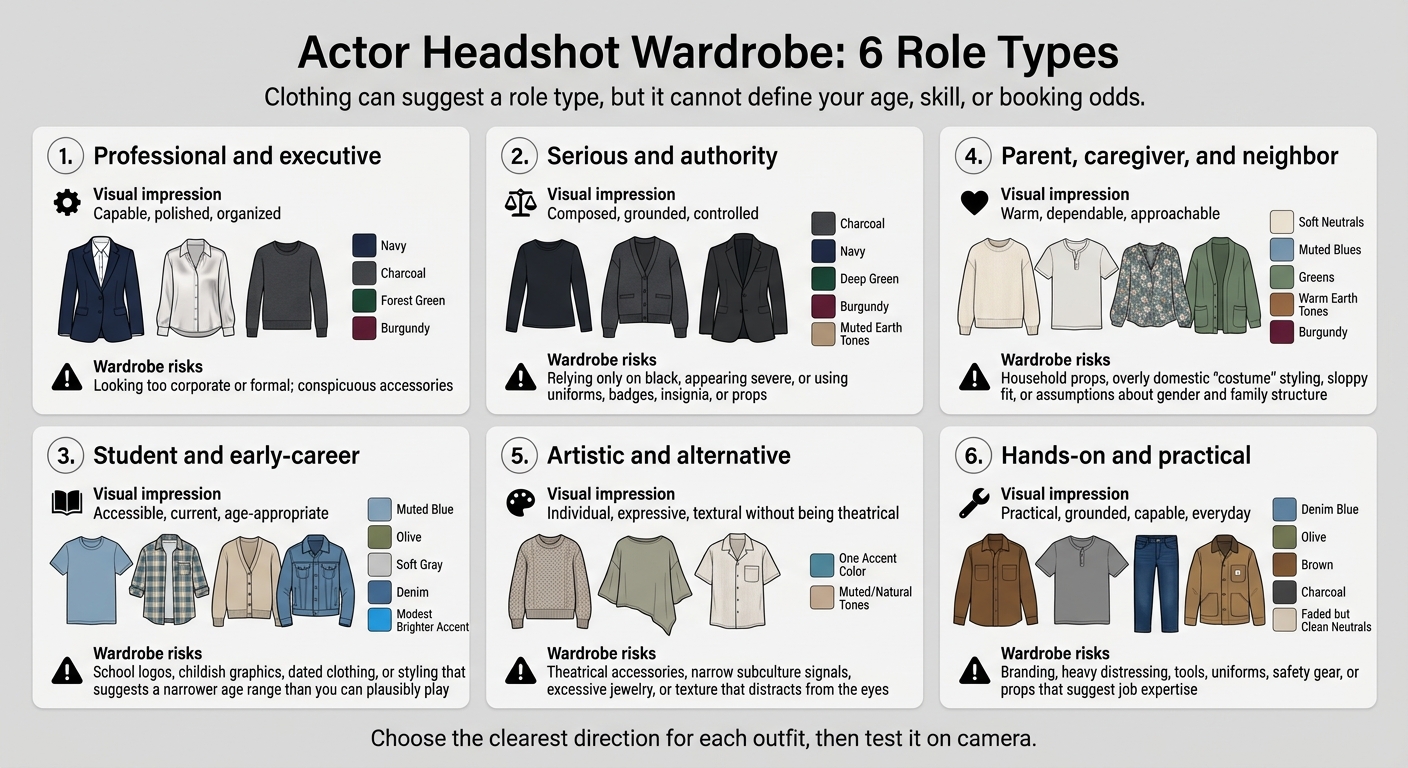
Actor Headshot Wardrobe: 6 Role Types
Use these outfits as visual cues for the roles you submit for most often on casting platforms. Clothing can suggest a role type, but it cannot define your age, skill, or booking odds. Use the table to choose the clearest direction for each outfit before testing it on camera.
| Role family | Visual impression | Suitable garments | Color direction | Wardrobe risks |
|---|---|---|---|---|
| Professional and executive | Capable, polished, organized | Structured blazer, collared shirt, polished blouse, fine-gauge sweater | Navy, charcoal, forest green, burgundy | Looking too corporate or formal; conspicuous accessories |
| Serious and authority | Composed, grounded, controlled | Dark solid top, structured cardigan, jacket, or tailored layer | Charcoal, navy, deep green, burgundy, muted earth tones | Relying only on black, appearing severe, or using uniforms, badges, insignia, or props |
| Student and early-career | Accessible, current, age-appropriate | Simple tee, casual button-down, cardigan, denim jacket or other clean denim layer | Muted blue, olive, soft gray, denim, or a modest brighter accent | School logos, childish graphics, dated clothing, or styling that suggests a narrower age range than you can plausibly play |
| Parent, caregiver, and neighbor | Warm, dependable, approachable | Soft sweater, henley, understated blouse, relaxed but intentional overshirt or cardigan | Soft neutrals, muted blues, greens, warm earth tones, burgundy | Household props, overly domestic “costume” styling, sloppy fit, or assumptions about gender and family structure |
| Artistic and alternative | Individual, expressive, textural without being theatrical | Textured knit, relaxed silhouette, simple open collar, understated layered top | One accent color, with the rest muted or natural | Theatrical accessories, narrow subculture signals, excessive jewelry, or texture that distracts from the eyes |
| Hands-on and practical | Practical, grounded, capable, everyday | Clean overshirt, plain tee, henley, simple denim, workwear-inspired jacket | Denim blue, olive, brown, charcoal, faded but clean neutrals | Branding, heavy distressing, tools, uniforms, safety gear, or props that suggest job expertise |
Then adjust how much formality, warmth, or edge each look projects.
Professional and Executive Roles
Change the formality, not your whole look. Add a structured blazer for a more formal impression, or take it off for a less formal professional look. Keep the styling within what you'd actually wear.
Serious and Authority Roles
Let your expression, posture, and eye contact carry authority. Dark solids and controlled contrast can support that impression. Aim for composed, not severe - without defaulting to all black or adding occupational identifiers.
Student and Early-Career Roles
Stick to simple basics that fit your actual playing range. Skip school merchandise and childlike styling that make the age suggestion too narrow.
Parent, Caregiver, and Neighbor Roles
Soft texture, an easy fit, and an open expression help you look approachable. Everyday clothing is enough.
Artistic and Alternative Roles
Let one texture or restrained color show individuality. Go light on accessories, and avoid narrow subculture signals that pull attention from your face.
Hands-On and Practical Roles
Choose a clean, well-maintained overshirt, henley, denim, or simple jacket to suggest practicality. Leave out equipment and artificial grime.
Plan Your Wardrobe and Casting-Profile Photos
Pack 2 or 3 Tops and 1 Layer
Let your target roles guide what you pack. Bring 2–3 mix-and-match tops and 1 layer to build several looks without packing more than you need.
| Garment | Purpose |
|---|---|
| 2–3 tops at different formality levels | Cover looks from casual to professional. |
| 1 jacket, cardigan, or overshirt | Add texture or structure to several tops. |
Check Fit and Test Each Outfit
Before the session, check how each outfit looks on camera - not just in the mirror. Look for wrinkles, see-through fabric, and visible branding. Sit, stand, and turn to spot fabric that pulls or bunches and necklines that shift.
Take test photos to see which combinations work best on camera, then pack everything clean and ready to wear.
Match Profile Photos to Target Roles
After the shoot, choose images that read clearly at thumbnail size. Group your target roles into 3–4 lanes and assign each lane a primary look from the session.
Check each platform’s crop and photo requirements before choosing images. After uploading, check the crop again to make sure it displays as intended.
Update your photos when your appearance changes, and revisit your primary images when your career goals shift.
Conclusion: Keep Clothing Simple and Profiles Current
Track which headshots get the most interest, and replace images that aren’t working. Keep your profile details and submission preferences up to date as things change.
Final checklist:
- Review which headshot looks get the strongest response.
- Update your credits, skills, and availability.
- Check submission preferences whenever your availability, union status, or minimum pay changes.
FAQs
How do I choose which role types to target?
Start with role types you’ve booked before and have strong materials to support. Aim for 15–20 submissions per week in those areas, plus 5–10 in newer categories that fit your brand.
Watch for repeated keywords and character types in relevant casting breakdowns. Use that language in your profile, and make sure your headshots, bio, and highlighted credits match the roles you’re targeting. Set firm boundaries around union status and location to keep your submissions focused.
Can one headshot work for multiple role types?
A single headshot can represent you, but it rarely shows the full range of roles you’re after. Casting directors look for visual cues that suggest a character type: a friendly smile for comedy or a reflective expression for drama.
Keep at least two high-quality headshots and update them every 12 to 24 months. This gives casting directors a clearer view of your range and helps them picture you in specific roles.
How can I create distinct looks on a budget?
Before your shoot, decide which roles you want to target - student, parent, or professional, for example. Then plan outfits with everyday clothes you already own. Each look should suggest the role without feeling like a costume.
Mix layers, accessories, and neutral basics to create different looks and show your range while keeping costs low. Skip distracting patterns and overly stylized details.