
Advanced Role Matching: Actor's Guide
How automated role-matching pairs actor profiles with roles, boosts submissions and exposure, and shows how to optimize profiles for better auditions.


Role matching algorithms are transforming the casting process by automating how actors are paired with roles. These systems analyze actor profiles and casting breakdowns to calculate compatibility scores, saving time and increasing precision. Platforms like CastmeNow allow actors to apply for over 150 roles weekly, compared to the traditional 15–20, by automating submissions and continuously updating actor profiles.
Key Takeaways:
- How It Works: Algorithms analyze physical traits, skills, media assets, and preferences to generate match scores for roles.
- Why It Matters: Actors save time, increase exposure, and improve their chances of landing roles. Nearly 49% of actors report better audition matches thanks to AI tools.
- Optimization Tips: Use specific keywords, update profiles regularly, and leverage analytics to refine submissions.
- Future Trends: AI is enhancing personalization, with tools predicting actor strengths, analyzing chemistry, and even offering real-time feedback on auditions.
These tools are not just about efficiency - they're reshaping how actors manage their careers and find opportunities.
Cast Me Now: How this AI Workflow Helps Actor Submissions
How Role Matching Algorithms Work

Traditional vs Automated Casting: Efficiency Comparison for Actors
Role matching algorithms function as automated tools designed to connect actor profiles with casting opportunities. They analyze data from your casting profile - like your headshot, resume, union membership, and unique skills - and compare it to casting breakdowns from various platforms. The result? A numerical fit score that reflects how well your profile matches a casting director's criteria. For instance, if a role calls for a 5'8" actor with stage combat skills and a New York accent, only profiles listing those specifics will score highly.
These systems go beyond basic details. Using Natural Language Processing (NLP), they recognize both explicit qualifications (like "5+ years of experience") and subtler traits (like "comedic timing"). Advanced platforms such as CastmeNow continuously update, linking your growing skill set and experiences to new opportunities. The fit score they generate draws from a wide range of measurable data points, outlined below.
Data Points That Algorithms Analyze
Modern role matching systems assess various data categories to determine compatibility. Physical attributes - height, weight, hair color, eye color, and age range - are fundamental for aligning with character descriptions. Technical skills like accents, stage combat, dance, or sports help identify candidates for roles requiring specific training. Your media assets, such as headshots and demo reels, are also evaluated to gauge visual suitability and performance style.
Additionally, these algorithms consider professional status - union membership (e.g., SAG-AFTRA, AEA), past credits, and formal training - ensuring you meet the requirements for certain projects. Your user preferences, such as minimum pay, location, and project type (film, TV, theater, or commercial), act as filters, showing you roles that align with your career goals.
| Data Category | Specific Data Points | Purpose in Matching |
|---|---|---|
| Physical Attributes | Height, weight, hair/eye color, age range | Matches basic character descriptions |
| Technical Skills | Accents, dialects, stage combat, dance, sports | Filters for roles requiring specialized skills |
| Media Assets | Headshots, demo reels, performance samples | Assesses visual fit and style |
| Professional Status | Union affiliation, credits, training | Ensures eligibility for specific projects |
| User Preferences | Pay rate, location, project type, availability | Aligns with your personal career priorities |
How Automation Improves Casting Efficiency
Automation has revolutionized casting, turning it from a manual, time-intensive process into a streamlined, 24/7 system. Instead of relying on you to check casting sites during your free time, automated systems continuously monitor opportunities. Submissions happen almost instantly, ensuring your profile is considered as soon as a role is posted.
These systems not only save time but also reduce errors and adapt based on past successes. For example, CastmeNow integrates your activity across multiple casting platforms into a single dashboard for easy management. According to CastmeNow:
We build a living graph of your entire acting career connecting dots between roles, skills, and opportunities that humans miss.
This means the system can uncover opportunities you might overlook, like roles requiring a mix of skills from different performances or projects in genres that align with your training. Here’s a comparison of manual casting versus automated systems:
| Metric | Traditional Manual Casting | Automated Role Matching |
|---|---|---|
| Search Frequency | Limited to your available time | Continuous 24/7 monitoring |
| Submission Speed | Hours to days after posting | Minutes after posting |
| Accuracy | Prone to human error and fatigue | Precision through algorithm matching |
| Platform Management | Requires logging into each site | Unified dashboard for all platforms |
| Learning Ability | Static, no improvement over time | Adapts based on past successes |
How to Optimize Your Casting Profile
Fine-tuning your casting profile can significantly enhance your career prospects by working seamlessly with automated role-matching systems. A strong profile doesn’t just tell casting directors who you are - it ensures matching algorithms can easily identify you as the perfect fit for specific roles. For example, instead of writing something generic like "Actor with experience in film and TV", try something more detailed: "20s African-American actress, 5'6", specializing in dramatic roles, fluent in Spanish, trained in Meisner technique, with credits in indie dramas and Netflix series." This level of detail aligns with how casting systems parse character traits, which can lead to better match rates for actors looking to land roles.
Creating a Keyword-Optimized Profile
Your profile isn’t just for human eyes; it’s also a key tool for algorithms scanning for specific terms in casting breakdowns. That’s why clarity and precision are essential. Include all relevant physical details and technical skills. For instance, list accents you can perform (be specific), stage combat experience, dance styles, sports, musical instruments, or specialized training like the Meisner technique.
When writing your bio, use keywords that casting directors commonly include in breakdowns. For example, if you’ve portrayed law enforcement characters, mention terms like "police officer", "detective", or "FBI agent." If comedy is your strength, include phrases like "comedic timing", "improv", or "physical comedy." Additionally, make sure your union status (e.g., SAG-AFTRA, AEA) and any noteworthy credits are clearly stated. By mirroring the language casting directors use, you increase the likelihood of being flagged as a match by the system. Once your profile is rich in relevant keywords, you can use analytics to fine-tune it further.
Using Analytics to Improve Your Profile
Analytics take the guesswork out of optimizing your casting profile by offering actionable data. Platforms like CastmeNow provide performance metrics that can help you refine your approach. For instance, fit scores indicate how well the system is matching you to roles. If irrelevant opportunities keep popping up, it might be time to adjust your skills, preferences, or keywords.
Pay attention to your application-to-audition ratio to see if your headshots or resume may need an upgrade. Similarly, your audition-to-callback ratio can reveal insights into your performance quality. Analytics can also help you identify casting directors who frequently call you in, giving you a clearer picture of where your strengths lie and who your professional supporters are. With tools like CastmeNow, you can track these metrics and make targeted improvements to your profile for better results.
Using Automation Tools for Role Matching
Automation tools have transformed the way actors navigate the submission process by cutting down on tedious manual tasks and boosting both the volume and precision of applications. Forget the hassle of manually searching for roles - automation handles it all. These tools scan for new opportunities, assess their suitability, and submit applications instantly. This means actors can spend more time honing their craft, preparing for auditions, and building industry connections, instead of drowning in administrative work. Let’s take a closer look at how CastmeNow uses automation to match you with the perfect roles.
How CastmeNow's Algorithm Matches You with Roles
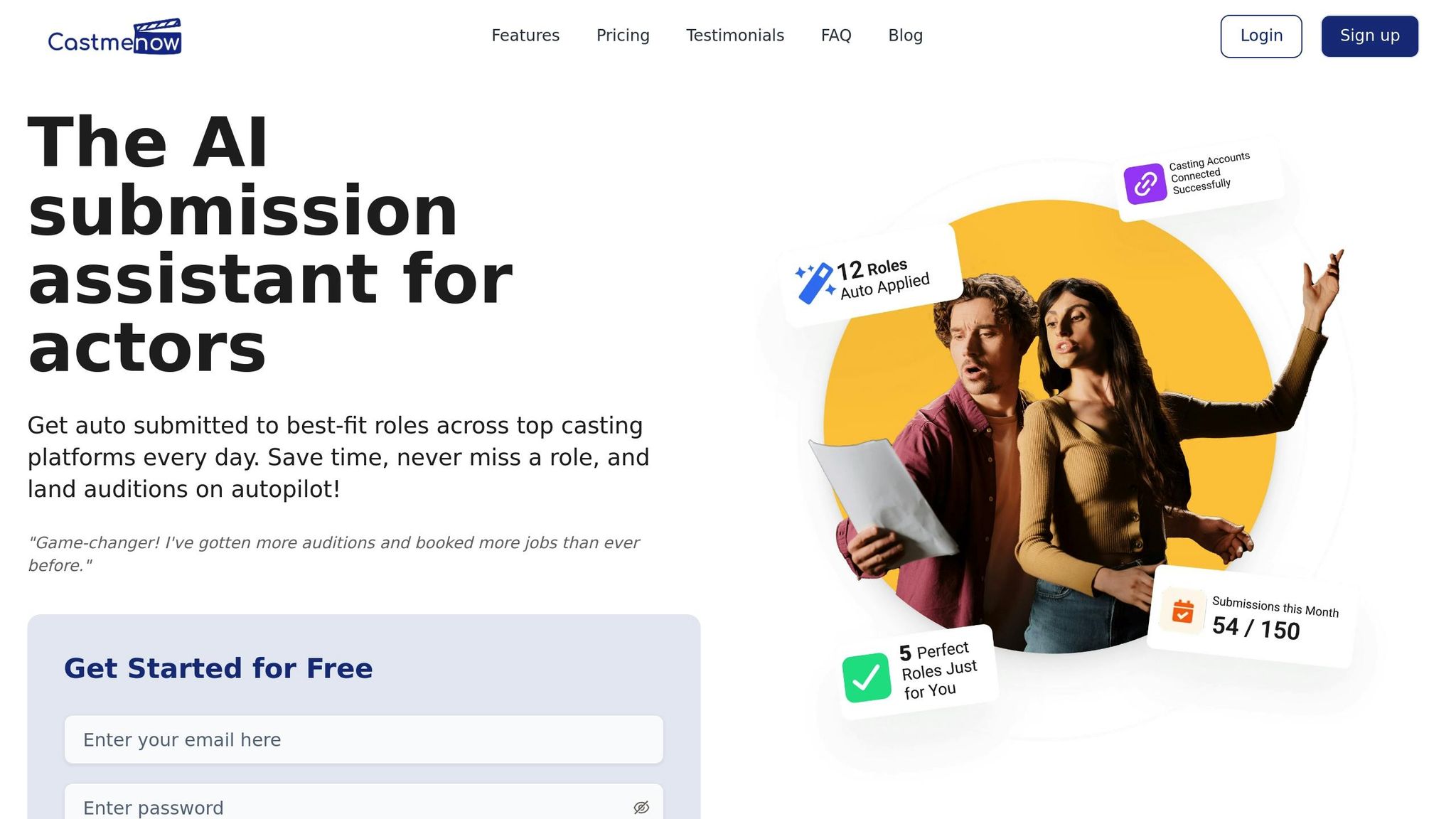
CastmeNow integrates directly with major casting platforms like Casting Networks and Actors Access, working around the clock to ensure you never miss an opportunity. Since casting directors often select only 10–15 actors within the first day of posting, speed is critical - and this system delivers. Using Machine Learning (ML) and Natural Language Processing (NLP), CastmeNow analyzes demo reels for emotional delivery and even picks up nuanced traits like "comedic timing" from your bio.
The platform’s Discover feature offers a curated list of roles, complete with fit scores and tags that explain why each match was made. This transparency lets you quickly review and, if needed, manually apply to roles with a single click. With automation, users experience a dramatic increase in exposure, accessing 150+ roles weekly compared to the usual 15–20.
Setting Role Preferences in CastmeNow
To make the most of automated matching, you can fine-tune your settings to align with your career goals and availability. By configuring preferences, the system targets roles that truly fit your needs. You can set parameters like union status (SAG-AFTRA or non-union), pay rates, geographic range, and specific project types (film, TV, theater, voiceover). Additional filters allow you to prioritize role significance (speaking parts versus background), production scale (student films versus big-budget productions), and demographic details that match your profile.
You can even define your size card, minimum pay, and preferred filming locations to avoid irrelevant submissions. The more detailed your preferences, the higher your algorithm’s relevance rate - up to 85% accuracy. By linking all your profiles through the CastmeNow Profile Hub, you create a centralized view of your career. The system can also tag headshots and reels, tailoring submissions based on role type - whether theatrical or commercial. Fine-tuning these settings ensures smarter matches and sharper targeting as you progress.
The Future of AI in Casting and Role Matching
The casting world is changing fast, and AI is at the heart of this transformation. What once relied on basic keyword searches has now evolved into advanced tools that predict actor-audience appeal, assess on-screen chemistry, and even analyze performances. Today, 73% of AI tools in casting are actively used in the industry, signaling a major shift in how actors find opportunities. Staying ahead of these changes could open new doors for your career. This shift is creating a casting process that's more tailored and precise than ever before.
How AI Is Making Casting More Personalized
AI is pushing past basic profile matching to offer a truly customized casting experience. For instance, Talent Analysis AI can evaluate an actor’s past work and recommend roles that align with their strengths. Similarly, Script Matching AI reviews character breakdowns and pairs them with actor profiles, saving time and improving accuracy. Some systems even analyze on-screen chemistry by studying past collaborations, screen tests, and even social media interactions, allowing casting directors to predict which actors might click before they ever meet.
This personalization doesn’t stop at casting - it’s shaping career planning too. New platforms now provide "Artist Analytics", giving actors insights into which skills are in demand and how their pay stacks up against industry standards. Tools like talent demand forecasting use audience data and trends to predict which types of performers will resonate most with viewers. And the results speak for themselves: 49% of actors say AI tools have improved their chances of landing roles by matching them more effectively with auditions. Platforms like CastmeNow are already leveraging these technologies to offer tailored role suggestions.
Preparing for an AI-Driven Casting Industry
As AI becomes a bigger force in casting, actors need to adjust their strategies to stay competitive. Start by refining your digital presence - AI systems can scan thousands of headshots, reels, and résumés in seconds, so your materials need to be clear, keyword-rich, and properly organized. Keeping your profiles updated is key since Networking AI relies on current information to pitch talent accurately.
Be ready to embrace new audition formats. Virtual Reality (VR) and Augmented Reality (AR) are creating interactive, flexible audition environments, while real-time feedback algorithms now offer instant critiques on self-tapes. Already, 48% of actors have used AI-driven virtual backgrounds for remote auditions, showing how quickly these tools are becoming the norm. However, there’s a growing concern: 30% of performers worry AI could replace human actors in some roles by 2030. To stay ahead, focus on developing skills that AI can’t replicate - like emotional depth, improvisation, and genuine human connection. With 65% of entertainment professionals expecting AI to reshape how actors work within the next five years, staying informed and adaptable is no longer optional - it’s the key to thriving in this evolving industry.
Conclusion
The casting industry is moving at lightning speed, and staying ahead means mastering role-matching strategies. Thanks to automation tools, platforms like CastmeNow allow actors to apply for 150+ roles weekly - a massive leap from the previous 15–20. Even better, it slashes the time spent on submissions from over 7 hours a week to less than 2. This level of efficiency is reshaping how actors manage their careers.
These tools aren’t just about saving time - they’re changing the game. Nearly half of actors (49%) say AI tools have boosted their chances of landing roles by improving audition matches. Plus, algorithm-driven casting is helping underrepresented performers get noticed, breaking through biases that often exist in traditional processes. Imagine applying for roles while you sleep, with data-driven algorithms ensuring you're matched to opportunities that truly fit your profile. It’s not just about working harder - it’s about working smarter.
The numbers tell a clear story: 65% of acting professionals believe AI will significantly change the industry within the next five years. This isn’t a trend to watch from the sidelines - it’s a shift to embrace now. Platforms like CastmeNow make it easy to explore these tools with a 30-day free trial that offers full automation - no credit card required. Whether you’re just starting your acting journey or aiming to scale your submissions, these technologies are no longer optional; they’re essential for staying competitive.
Think of your profile as your product, automation as your distribution, and analytics as your roadmap. Actors who combine solid fundamentals with smart technology aren’t just keeping pace - they’re stepping ahead in a field that increasingly values efficiency and strategic thinking.
FAQs
How can role-matching algorithms help actors book more roles?
Role-matching algorithms evaluate an actor’s headshots, résumé, reels, and preferences to pinpoint the best casting opportunities. They generate a fit score to rank how well an actor aligns with a role and then automatically submit applications for the most compatible matches.
This system streamlines the process by increasing the number of submissions, enhancing the precision of actor-to-role matches, and accelerating casting decisions. For actors, it means less time spent on applications and a greater chance of securing auditions and roles.
What data do role-matching systems use to find the best opportunities for actors?
Advanced role-matching systems dive into multiple factors to pair actors with roles that suit them best. They begin by analyzing profile details from casting platforms. This includes headshots, demo reels, resumes, physical traits (like age, height, and ethnicity), specialized skills (such as accents or stunt work), and past experiences. Together, these elements form a comprehensive snapshot of an actor’s capabilities.
They also take into account actor preferences, such as the types of roles they’re looking for - whether it’s a lead, supporting, or commercial gig. Other factors, like preferred location, union membership, pay expectations, and availability, all play a role in narrowing down the options. On the flip side, casting call specifics - character descriptions, required skills, project budget, and shooting schedules - are cross-referenced to ensure a strong match between the actor and the role.
Lastly, these systems incorporate activity data, such as roles actors have applied for or expressed interest in, to fine-tune recommendations over time. By combining all these details, platforms like CastmeNow make it easier for actors to find roles that align with their talents, ambitions, and schedules, cutting down on wasted effort.
How can actors improve their profiles to get better role matches?
To boost your casting profile and land better role matches, focus on presenting a polished and updated version of yourself. Start with professional headshots - you’ll need one bright, commercial-style shot and one theatrical shot, both with clean, simple backgrounds. Update these anytime your appearance changes to ensure they’re current. Keep your bio short and impactful, highlighting key credits, training, and any unique traits that set you apart. Make sure your resume includes recent roles, special skills (like speaking multiple languages or sports expertise), and accurate physical stats.
A demo reel is a must. Keep it between 1–2 minutes, showcasing a range of emotions and character types. Use file formats that work well on casting platforms, like JPG or PNG for photos and MP4 for videos. Refresh your profile regularly - actors who update theirs every quarter tend to get more views and auditions.
Take advantage of tools like CastmeNow, which syncs with your casting profiles to match roles based on your preferences and even auto-applies for you around the clock. Fine-tune your preferences - things like age range, location, union status, and pay level - and keep an eye on callback rates to tweak your profile for better results. By keeping everything up to date and using automation, you’ll save time and increase your chances of landing auditions.