How Audience Data Shapes Casting Trends

Casting shifts after audience behavior changes, not at the same time. If I wait for breakdowns to show the shift, I’m often late.
Here’s the short version:
- Streaming now drives a huge share of viewing, hitting 47.5% of total TV use in December 2025
- Scripted streaming seasons are landing farther apart, with the average gap moving from about 12 months in 2020 to 21 months in 2025
- That means today’s casting demand may reflect audience behavior from many months ago
- A viral hit can affect near-term interest, but repeated performance across genres, platforms, and release cycles is what shapes role demand over time
- I should change my materials lightly for short spikes and make bigger updates only when a pattern keeps showing up
- The main places to act are my profile, reel, and submission mix
A simple way to think about it:
| Signal | What I do |
|---|---|
| Short spike | Make small changes |
| Lasting pattern | Update positioning |
| No clear response yet | Hold steady and track results |
What matters most is not spotting buzz. It’s knowing whether that buzz will last long enough to change what casting is asking for. Once I know that, I can put the right headshot first, lead with the right reel clip, and send more submissions into lanes that are already getting traction.
The problem: short-term buzz and long-term demand are not the same thing
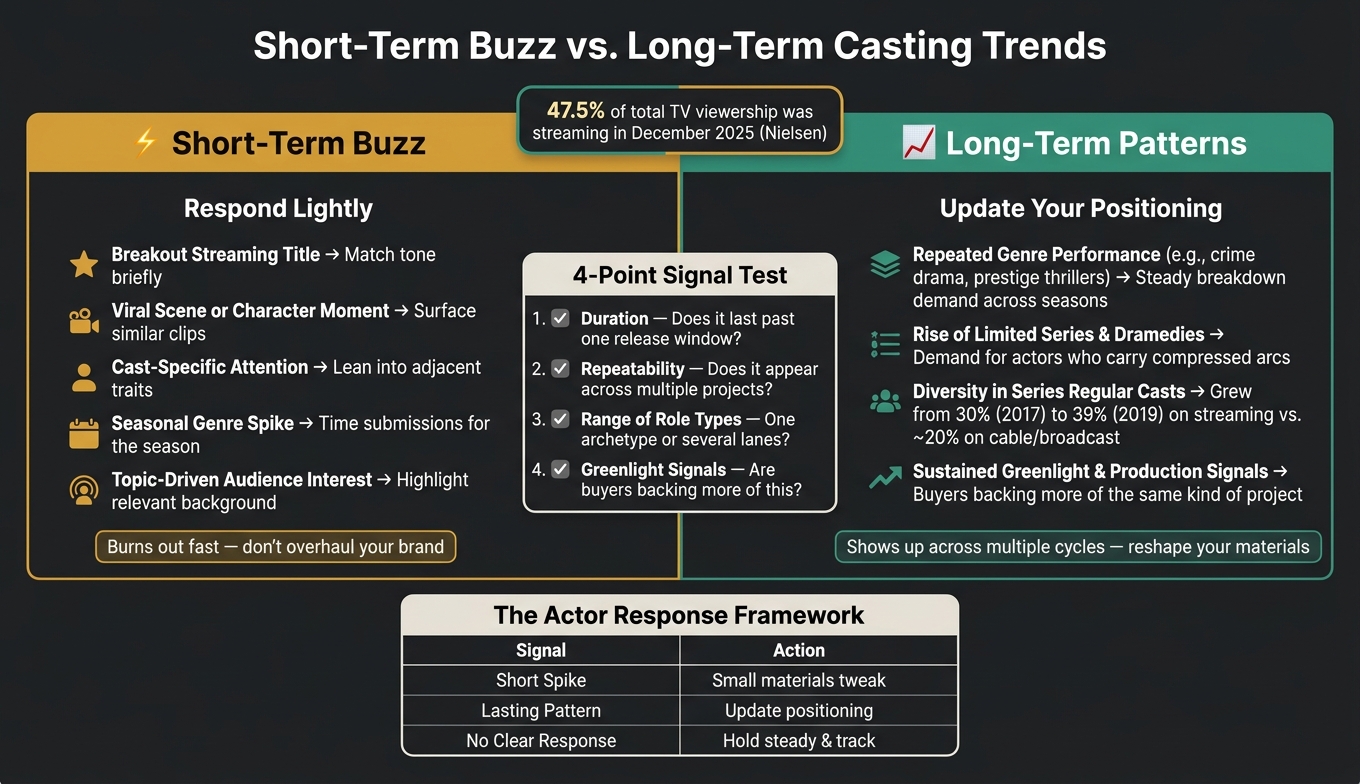
Short-Term Buzz vs. Long-Term Casting Trends: How Actors Should Respond
A viral moment can look like a trend that’s here to stay. But those are two different things.
They run on different clocks. Audience behavior usually shifts casting demand first. Breakdowns tend to reflect that change later. And short bursts of hype can pull in attention without changing what casting is asking for in any steady way.
That gap matters. If you read the signal the wrong way, you’ll change the wrong materials. And if you chase the wrong thing, you can weaken your positioning.
Short-term signals that shift near-term casting interest
Short-term signals matter. They just burn out fast. The key is to name the signal before you change anything.
Think of them as temporary clues, not a full rewrite of the market.
| Signal Type | What it means for demand | Best Actor Response |
|---|---|---|
| Breakout streaming title | Increased demand for similar tone, pacing, and character dynamics - not literal replicas | Match tone briefly |
| Viral scene or character moment | Short-lived curiosity about a specific archetype | Surface similar clips |
| Cast-specific attention | A brief spike in demand for adjacent types, such as similar age range, energy, or background | Lean into adjacent traits |
| Seasonal genre spike | Predictable, cyclical casting needs such as holiday rom-coms, Halloween horror, or summer action | Time for the season |
| Topic-driven audience interest | Short-term demand for projects reflecting current cultural conversations | Highlight relevant background |
A good rule here: respond lightly. If one show blows up on Netflix, that doesn’t mean casting wants copies of that show. More often, it means buyers and teams are paying attention to a mood, a pace, or a kind of character chemistry for a little while.
Long-term patterns that reshape casting over months and seasons
Long-term patterns are quieter. They don’t arrive with the same noise as a viral clip or a hit release. Instead, they show up again and again across unrelated projects, platforms, and release windows. That repeated pattern is what separates a lasting shift from buzz.
One clear case is repeated genre performance. When crime drama and prestige thrillers keep ranking well across U.S. streaming and network slates over several years, the result isn’t just one hit. It creates a steady stream of breakdowns for ensemble detectives, legal teams, and morally messy leads, season after season. In the same way, the rise of event limited series and half-hour dramedies has created steady demand for actors who can carry compressed arcs and switch tone without losing the thread. That’s why the same role patterns keep showing up across seasons.
Representation-related demand is another durable pattern. Streaming platforms increased the share of diverse talent in series regular casts from 30% in 2017 to 39% in 2019, nearly double cable and broadcast's diverse talent levels that same year. That’s not tied to one hit show or one news cycle. It points to a deeper shift shaped by audience expectations, and it has continued across platforms and release cycles.
This is the kind of demand that should shape what casting sees first - your profile, your reel, and the way you frame yourself.
How to tell a temporary spike from a lasting trend
Before you change your brand, materials, or training focus, test the signal against four things:
- Duration: Does it last past one release window?
- Repeatability: Does it show up across more than one project or cycle?
- Range of role types: Is it affecting one narrow archetype, or does it show up across several role lanes?
- Greenlight and production signals: Are buyers and producers backing more of this kind of project?
If a pattern holds across multiple cycles and role types, treat it as durable. If it doesn’t, keep your response light.
Clear signals can justify a small materials update. Weak signals usually don’t.
Once a signal passes those tests, the next move is practical: line up your profile, reel, and submissions with it.
The solution: adjust your actor materials to match real demand
When a signal keeps showing up, update your materials with purpose. Start with the parts of your profile casting notices first.
Profile edits that match current casting categories
Think of your profile as a filter, not a life story. Casting teams search by type, tone, and function, not your full work history. So the better question isn’t “what have I done?” It’s “what lane is casting paying for right now, and does my profile show that fast?”
Start with headshot order. Your first image does a lot of heavy lifting. It should match the role lane pulling the most breakdowns at the moment. If grounded drama is getting you seen, put a clean, grounded headshot first. You’re not changing who you are. You’re just putting the most bookable version of your brand up front.
Then move to your type and tone tags and your top skills. Use the same language that keeps showing up in recent breakdowns. If you’re seeing terms like “grounded best friend,” “young professional,” or “first responder” again and again in the roles you’re reading for, add those exact phrases to your tags. For skills, keep it honest. Only list what you can do on set without prep. Then reorder the section so your five to seven most relevant skills appear first, where casting can spot them without scrolling.
Last, tighten your bio and highlighted credits so they line up with current genre demand. In 2–3 sentences, name the character types and tones that are booking now, then put your strongest matching credits first.
From there, your reel should back up that same lane without boxing you in for the long run.
Reel choices that support current signals and long-term positioning
Your reel order should answer two things: what’s booking now, and where are you trying to go?
Lead with the tone that’s getting you tapes. If commercial comedy is popping and that’s where your callbacks are coming from, open with 20–30 seconds of your best comedic work. Then follow right away with a scene tied to your long-term target, like a grounded streaming drama clip. That way, casting sees both lanes in the first 90 seconds. Keep the reel tight: 1.5 to 3 minutes, with your best moment in the first 4 to 10 seconds.
You can freshen up your reel this week without shooting a single new frame. Cut longer scenes down to their sharpest 20–40 second moments. Drop footage that no longer fits how you look or how you’re being cast now. If older clips look dated in resolution or style, move them down or cut them. More footage doesn’t help if the first impression feels old. Recency and clarity matter more than volume.
Lead with the clip that matches the active signal, then follow with a scene that points to your longer-term lane.
Once your materials line up with demand, the next move is putting them in front of the right roles.
sbb-itb-daa9c42
Submission focus: where to direct your effort when trends shift
The next step is simple: send those materials toward the roles most likely to respond. Once your headshots, reel, and credits are in shape, your submissions should follow the clearest demand signals.
How to prioritize submissions without overreacting to hype
When a trend spikes, don't ditch your main lane. That's usually where people get pulled off course. Keep most of your weekly submissions focused on roles where your credits and reel already line up. Then set aside a smaller share for rising categories that still make sense for your brand. Chasing every spike is noise, not strategy.
A better way to handle this is with a tiered submission system. Put most of your weekly submissions - about 15 to 20 roles - into your core lane: the types, tones, and mediums where you already have booking history and strong materials. Then use a smaller portion, around 5 to 10 roles, for categories that are gaining momentum based on current signals but still fit your brand. Keep a hard cap on experimental submissions each week, and scale them back if they get no traction after a set test period.
That rule should shift a bit by medium. TV moves fast, so put current co-star and guest-star lanes near the top. Film tends to move slower, so trend-based projects should stay secondary. Commercials, theater, and voiceover each move on their own timelines, so your submissions should match the lane your current materials already support.
Track submissions by medium and role type. Then compare auditions per 20 submissions to see where casting is actually responding.
Using Castmenow (Cast Me Now) to act on a trend-informed submission plan
Once those weekly rules are in place, automation can take care of the repeat work. The tough part of a tiered submission plan usually isn't building it. It's sticking to it week after week while you're also working on sides, heading to callbacks, and trying to live like a normal person. That's where Castmenow comes in.
Castmenow is an AI-powered submission assistant that connects securely to existing casting platforms like Casting Networks and Actors Access. You set your priorities - preferred mediums, role types, tier rules, weekly caps - and it watches new breakdowns, checks fit against your profile, and submits with speed and consistency. Core roles come first. Adjacent roles come next. Experimental slots stay capped.
That gives you more time for the calls that need your judgment: which trends are worth leaning into, when your materials need a refresh, and where your career is headed. Castmenow handles the execution. You keep control of the strategy.
Conclusion: use audience data to make smarter casting moves
Audience data is shaping casting faster than ever. Nielsen reported that streaming reached 47.5% of total TV viewership in December 2025, the largest share ever recorded. That’s not a blip. It’s a market signal.
The smart move isn’t to chase every change you see. It’s to tell the difference between a short-lived spike and demand that’s sticking around.
Before you change your positioning, separate temporary interest from patterns that keep showing up.
Once you’re confident the signal is real, update the materials casting sees first. Keep everything current, put your strongest relevant clips up front, and line up your profile with the role lanes casting is paying for right now.
Then watch the results. Are those changes leading to more auditions? Which genres keep bringing in auditions, callbacks, and booking chances? Use that information to tighten your materials and guide your submissions.
Observe the signal, adjust your materials, and submit with intent.
FAQs
How long should I wait before updating my materials?
Treat updates as a regular habit, not a one-and-done job. Check your profile and skills every month. If your profile hasn’t changed in 90 days or more, refresh your headshots, add new credits, or update your union status so you stay visible.
Every few months, take a closer look at the bigger picture. Your target demographics may have shifted. Your materials might need a tune-up too. And if you’re submitting often but not getting many callbacks, don’t wait around - update your materials right away.
What signs show a trend is lasting?
A trend is more likely to stick when it shows up in longer-term patterns, not just short spikes.
What should you watch for? Signs like these:
- steady success rates for the same role types
- stable engagement-to-callback or callback-to-booking ratios
- repeated periods of higher response times or booking hot streaks
- the same genres or markets driving results across several weeks or months
It also helps when seasonality doesn't fully account for the lift. Check weekly metrics and monthly reports to see whether the pattern keeps showing up, instead of treating it like a one-time anomaly.
Which should I change first: my profile, reel, or submissions?
Start with your profile. Your headshots, resume, and skills are the main details used for matching, so they need to be accurate and up to date if you want to show up for the right roles.
Once your profile is polished and consistent, you can fine-tune your reel and submission approach by looking at the performance insights and booking patterns you track. A current profile also helps tools like Castmenow assess role fit with better precision.